What Is Medical Direction and How Does It Lower Your Workers Comp Costs?
The Problem with Traditional Workers Comp
Every year, Texas businesses spend billions on workers compensation insurance — and most of them are overpaying. The reason is not that their premiums are too high on paper. The problem is that their claims are out of control, and their experience modification rate (mod rate) keeps climbing as a result.
Here is how it typically goes: an employee gets hurt on the job. They go to the nearest emergency room. The ER runs a battery of tests, refers the patient to specialists, and the claim starts racking up costs. Meanwhile, the employee is out of work for weeks or months, collecting indemnity benefits. The carrier sets high reserves, and those reserves — along with the claim payments — feed directly into your mod rate calculation.
Three years later, you are still paying for that one claim through inflated premiums. Multiply that across several claims, and your workers comp costs can spiral to the point where they threaten your profitability.
This is the cycle that Medical Direction is designed to break.
What Is Medical Direction?
Medical Direction is not a product you purchase. It is a disciplined, repeatable process that takes control of the medical treatment narrative from the moment a workplace injury is reported. Instead of letting the injured employee choose their own doctor or default to an emergency room, Medical Direction routes them to a vetted occupational medicine provider — a physician who specializes in workplace injuries and understands the goal of functional recovery.
The Medical Direction program is provided through Industrial MD, and it encompasses every phase of the claim lifecycle:
- Immediate triage and provider selection — Injured employees are directed to occupational medicine clinics, not emergency rooms, for non-emergency injuries.
- Treatment plan oversight — Every treatment plan is reviewed to ensure it follows evidence-based protocols and avoids unnecessary procedures.
- Active claims management — Claims are monitored from first report through closure. We do not wait for the carrier to act.
- Return-to-work coordination — Structured light-duty and transitional work programs get employees back to productive work faster.
How Medical Direction Lowers Your Costs
Medical Direction attacks your workers comp costs from multiple angles simultaneously. Here is how each component contributes to lower premiums:
1. Reduced Medical Spend
Emergency room visits for non-emergency workplace injuries are one of the biggest cost drivers in workers comp. An ER visit for a strained back can easily run $3,000 to $5,000 before any follow-up care. An occupational medicine clinic treats the same injury for a fraction of that cost — and with better outcomes, because occupational medicine physicians understand functional recovery.
2. Lower Indemnity Costs
The longer an employee is out of work, the more indemnity benefits accumulate on the claim. Medical Direction shortens disability duration through structured return-to-work programs. Light-duty assignments keep employees productive while they recover, and transitional work plans ease them back to full duty systematically.
3. Better Reserve Management
Insurance carriers set reserves on every open claim — an estimate of the total expected cost. These reserves factor directly into your mod rate calculation. When claims are managed proactively, reserves stay lower because the carrier can see that treatment is controlled, recovery is progressing, and the claim is headed toward resolution. We also audit reserves regularly and push for reductions when the claim trajectory supports it.
4. Systematic Mod Rate Reduction
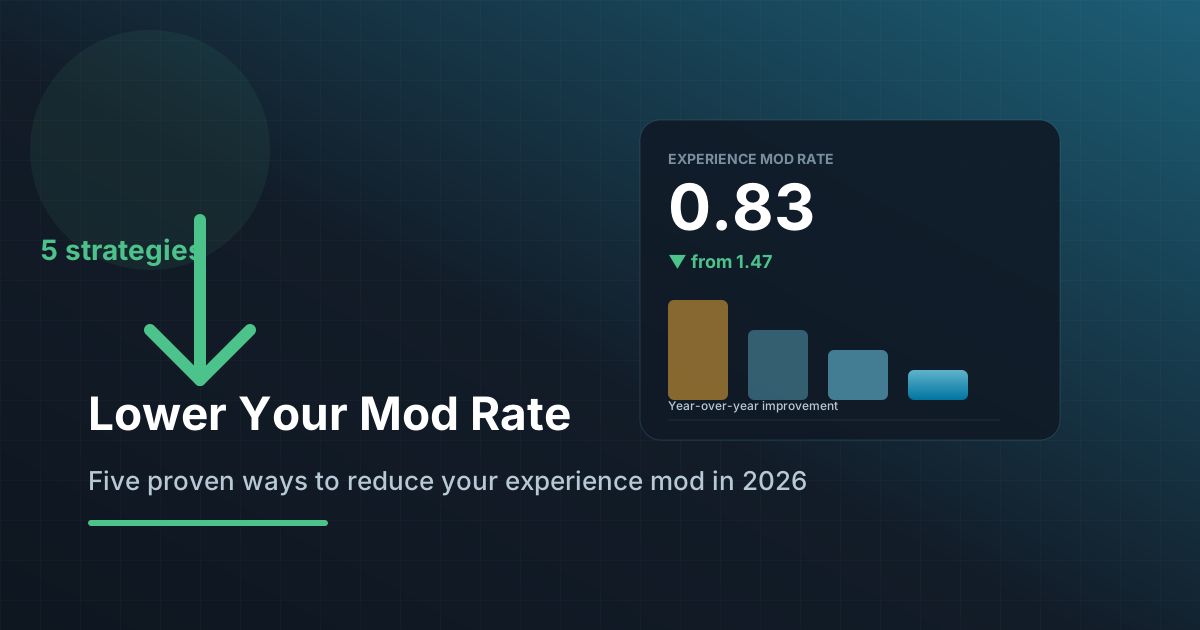
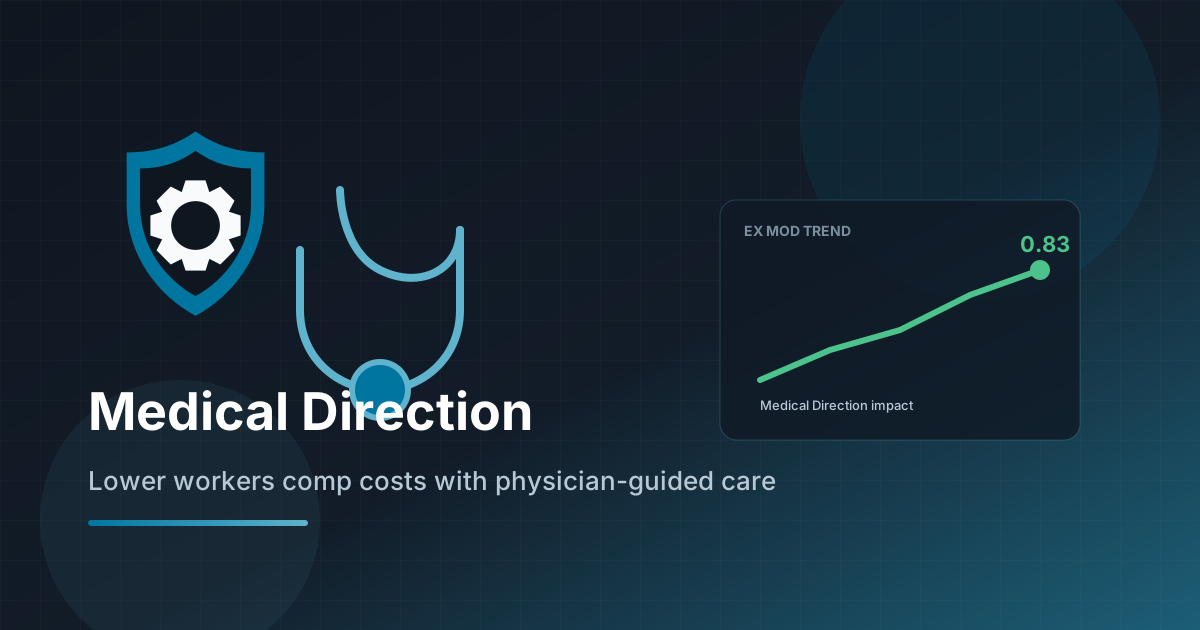
Your experience modification rate is a three-year rolling calculation based on your claims history compared to others in your industry. Every dollar saved on claim costs translates directly to mod rate improvement. Over a three-year cycle, companies participating in Medical Direction programs routinely see their mod rate drop below 1.0 — which means they are paying less than the industry average for their workers comp premiums.
Medical Direction vs. Traditional Approaches
Most insurance brokers take a reactive approach to workers comp. They place your policy, handle renewals, and maybe review your mod rate once a year. When a claim happens, they file the paperwork and let the carrier manage it. This passive approach is why most businesses see their mod rates stay flat or increase over time.
Medical Direction is proactive. We do not wait for claims to happen and then react. We build the infrastructure — preferred provider networks, reporting protocols, return-to-work programs — before the first injury occurs. When a claim does happen, the process kicks in immediately. The result is predictable: lower claim costs, faster recoveries, and a mod rate that improves year after year.
If your current broker is not talking to you about Medical Direction, they are leaving money on the table. Learn more about our risk management approach.
Who Benefits Most from Medical Direction?
Medical Direction delivers results for any business with workers compensation exposure, but the impact is greatest for:
- High-frequency industries — Construction, manufacturing, transportation, and staffing companies with regular workplace injuries see the fastest mod rate improvements.
- Companies with elevated mod rates — If your mod is above 1.0, Medical Direction can begin driving it down within the first year of participation.
- Businesses paying $50,000+ in annual workers comp premiums — The dollar savings from mod rate reduction become significant at this premium level and above.
Getting Started with Medical Direction
The first step is understanding where you stand today. We offer a complimentary Ex Mod review that analyzes your current modification rate, identifies errors on your worksheet, and shows you exactly how much you could save.
From there, we build a Medical Direction program tailored to your operations — including preferred provider networks in your area, claims reporting protocols for your supervisors, and return-to-work plans designed around the actual job duties in your workplace.
Medical Direction is not a gimmick or a marketing pitch. It is the most effective, proven approach to reducing workers compensation costs. And through our partnership with Industrial MD, we guarantee* results.
*Results are subject to program eligibility and participation requirements. Contact us for full program details.
Get a Free Workers Comp Quote
See how Medical Direction can lower your mod rate and reduce your workers comp costs.
Get Your Free Quote